Category: Conversation

  • We interview vogue dancer Darren Pritchard

    We interview vogue dancer Darren Pritchard

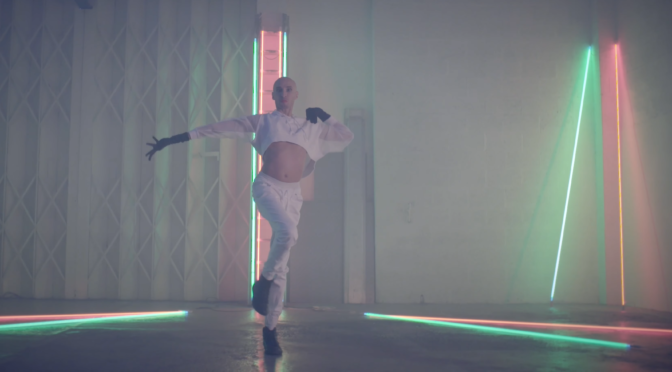
    Emma recently interviewed Darren Pritchard, vogue choreographer and teacher and mother of the dance troupe House of Ghetto based in Manchester.

    Darren is one of the stand-out stars from the recent BBC documentary Deep in Vogue, and features in the music video for our track ‘Chemical Reaction’.

    The interview took place over Zoom in early 2021 when the country was under national restrictions. Here’s the edited highlights!

    Hi Darren! Tell me, how are you coping with the pandemic?

    I’m really good and I’m really fortunate and blessed to have actually gained some work in new fields and new areas, which has kept me busy. I also have weekly meetings with my Houses which kept me really sane over Zoom. So, I’m blessed and I’m fortunate in this time where others in my career and field, and I’m talking about self-employed freelance artists are not.

    It’s so nice to hear that, because so many artists are struggling right now. You want people to thrive in these terrible circumstances, so I’m happy. So, tell us, how did you come to be a vogue dancer and choreographer?

    OK so, I actually started voguing a good few years ago, and how I started was through my House mother, which was Darren Suarez in Liverpool. I’m very fortunate that I call a second-generation UK voguer. He was an original voguer in the 80s in Liverpool. So what happened is, Paris is Burning came out, which is kind of like the bible for all vogue and he actually had a House in Liverpool called the House of Banjee Realness, which is taken from a category from Paris is Burning. So he had that group in Liverpool, and then vogue kind of went out of vogue. We kind of reconnected when we went to the same training institution but at different times. We had a conversation and at the time the Jason Nevins video It’s Like That came out with all the breakdancers. And I was like, “Darren, we need to do something like that, but with vogue”, because there was a re-emergence of the 70s/80s. It was all from a very cis, straight, male revival. And I was like, we need to bring back that 90s vibe of club culture and what that was about and those spaces that were a lot more revolutionary than those spaces are today.

    It just went from there. He taught me, trained me, mentored me, and I project managed the first few vogue balls in Liverpool. He is iconic and pioneering within the UK, the northern ball scene. So I was very fortunate that I had an original person was out when that iconic video dropped. He’s a beautiful voguer as well, and his style is old way. They say there’s no school like the old school, and that the old way is the only way, so I was really fortunate that I learned from him and I was able to pass that down. I always say that Darren’s the seed that made the tree grow.

    Would you consider yourself old way?

    Yes. My preferred preference if I’m walking a ball, is old way. Just to go a little bit into the style if people are listening to this and going “what is old way?” There’s three fundamental dance styles in vogue, when people are walking a ball. You’ve got old way, which is pre-90s, and with each of the sections there’s always a musical style that goes with it as well, because of the influence of the music and the sonic sound at that time. My old way track that I love is by First Choice.

    So, you went through the history of how the revival with Darren Suarez in the North, then you were involved in Deep in Vogue, this BBC documentary. Can you tell us a bit more about how that came about and how the Northern scene has become so prolific?

    The way Deep in Vogue came about was – we get lots and lots of requests from people for us to talk about the scene, to film it, to photograph it, but we’re very precious and we’re very wary of who comes into our scene, what those conversations are, and who’s taking pictures of us and filming us, and doing interviews like this. So it was around four years ago, I had a very good friend called John Paul Riley who I’ve known since I was 14. He came to every ball and supported it, and he said that there were two of his friends who wanted to make a documentary about the vogue balls. Dennis, one of the producers and directors of the documentary came along to the ball so he actually understood the culture and where it had come from. Amy had also gone to a couple of them. So John Paul was like, “Darren, Darren, they want to make a documentary, and they’ll be really respectful, and Amy’s an amazing editor and Dennis is just a really good person who’s got a really artistic eye”, and so I opened up the conversations with them. Then I became executive producer on that project, and that was very important to have someone involved.

    We had a beautiful working relationship – I really respect Amy and Dennis and the work they did on the documentary. It was all done for free and favours – very Mancunian! But we had access to some of the best stuff, the best equipment, the best studios. It was just that Manchester thing of, “I know somebody who knows somebody, will they do it for a plate of Thai vegan curry?” The music we got donated was by Crazy P and Nihilist, so we just created this documentary that we really wanted to be a love letter to the Northern vogue ball scene, and I think they really achieved that.

    It’s doing the rounds in America, and we’ve got a Blu Ray of it now and it’s a brilliant point of reference for when people ask about the Northern ball scene, then I can go “watch Deep in Vogue”.

    I watched it and I thought it was incredible. I thought it was beautifully done. It’s nice to see something in the North of England because often things are so London-centric, it’s a beautiful, high-quality scene.

    Yeah, and it’s like, it’s just opened up so many doors and I think that’s what captured people’s imaginations – the fact that it’s Manchester and Liverpool. I think what people connected to on that was it didn’t really matter that it was a queer documentary, because I said I wanted to do a show about humanity and humans and show the diversity of the vogue scene and how, no matter what colour, shape, creed, race, political affiliation (although we all are kind of the same there), we can have a scene and a safe space, always honouring where it came from. It was black and queer, disenfranchised kids from New York that set up this scene, but also, it’s moved on and it’s revolutionised and that essence of family and chosen family is alive in all of us. People get it from the North, if you’re from Leeds, if you’re from Sheffield, even up to Newcastle. When I went to Sheffield, people were like “you just get it”. You just get that kind of DIY, fighting culture and I think Ricky says that we know what it’s like to be oppressed in the North, we are at a disadvantage economically to the South just because of the way the political landscape lies.

    I just want to ask you why is that culture and community so important to you? What does it represent?

    Well, being a kind of queer, mixed-race guy, a working-class guy, from a single mother, brought up in the North, there’s a lot of resonances that I can take from the original voguers. I may not have been made homeless, but I was poor, and I was disenfranchised, and I was brought up in the 80s and 90s. A lot of it is that I get – besides my family that I am extremely close to – I get to have an amazing queer chosen family. There’s something about finding your tribe and finding your people that understand you 360 degrees. Women understand this about code switching. We use this as a racial term, but you know, about acting one way, or dressing another way. We have to downplay our culture, or women have to downplay their sexuality because it’s seen as too much, or as an invitation for unsolicited behaviour or negativity towards you. Without the queer/alt community and without my allies and people who understand me and understand safe spaces, that is so important to me. With the vogue Houses that I’ve built, I’ve been fortunate that I’ve built my tribe, I’ve built a friendship and a network of people that just get who I am and understand where I’m coming from.

    Tell us more about your Houses! I’d love to know more about House of Ghetto. What’s so unique about that and what’s so fabulous about that troupe?

    House of Ghetto is my baby, whenever people ask me, I say I’m mother of House of Ghetto. That started off originally as a collective of drag queens and the girls and a few gay guys, then it went to the six girls that you see in Deep in Vogue, they’ve gone on to do amazing things. That’s incarnated into a collective of queer guys now. So it’s changed and manifested and grown. Even the people that started it off originally, we’re all still friends. It’s not like I’ve pushed anyone out or people have left, it’s just that thing’s grow and they manifest, and they change.

    It’s extremely queer now, it’s all queer, all black and all male at the moment.

    If someone wanted to learn more about vogue dancing and culture, more than they’ve learned today and particularly in the Northern scene, where should they start?

    Instagram – that’s where most of the Houses platform themselves. Especially in the North, if you’re looking for a House, I’d say look at House of Flava, House of Ghetto, House of Black – that’s the best way to get in touch and see what workshops are going on, or if there’s a ball going to be put on. I’d say watch Deep in Vogue on iPlayer, so you know what it’s all about. And keep a look out for any of those Houses on Instagram more than Facebook.

    In-person meeting again, that’d be so amazing, wouldn’t it? And we can go to gigs again and see performances. I’m really hoping that happens soon.

    It shut down a few of the balls, so hopefully they’ll get back up this year and hopefully we’ll have another one in Leeds.

    So, what’s next for you?

    We’ve hopefully got some funding and will be doing our first family vogue ball which is more of a show, which is literally educating some children. We do a lot of vogue balls and people are like “I wish my kids could come but it’s not age-appropriate”, so we’re designing that. It may tour to seven cities if that comes through. Artistically I’m working on a musical called Rent Party and that’s been brought back this year. Planning balls and fundraising, money’s very hard to come by at the moment. And we’re still doing our gigs, so you may see us pop up at Glitterbox. We’ve started a relationship with Glitterbox and Defected Records, we dance with them a lot. Homo Electric we do and looking at some kind of monthly thing with one organisation at the moment, but until that’s confirmed I can’t say much more.

    Thank you so much Darren for joining me today, it’s been awesome!

    Thank you so much! Bye!
  • MUSIC: LEEDS LAUNCHPAD PANEL – EMMA ANNOUNCED AS ONE OF SEVERAL GUEST SPEAKERS

    MUSIC: LEEDS LAUNCHPAD PANEL – EMMA ANNOUNCED AS ONE OF SEVERAL GUEST SPEAKERS

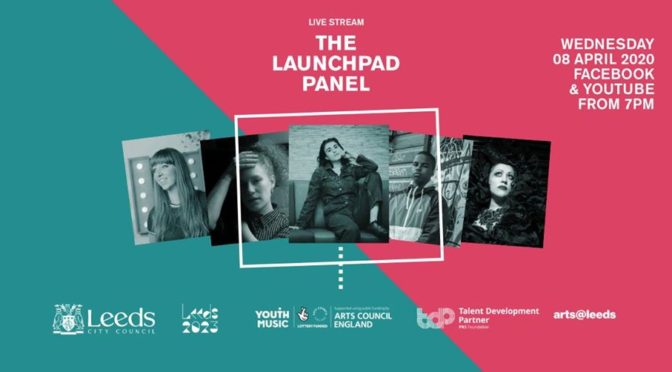
    Music:Leeds Launchpad Panel was scheduled to be the opening discussion at their Launchpad Conference on 28th March – and they have now decided to move this talk online, stream it live, for free, at 7 pm on Wednesday 8th April through their Facebook & YouTube pages.

    The panel is hosted by Emily Pilbeam (BBC Music Introducing, Pilbeam Presents) and features four artists who were selected from their Launchpad Open Call in 2019. The panellists have also benefited from a wide range of support from other organisations and funders including Jazz North, Black Music Festival, Help Musicians, PRS Foundation and Arts Council England.

    Panellists:
    Emma Mason (Galaxians)
    Jemma Freese (freese trio, DOMI, J Frisco)
    Armani Anderson-Hamilton (Marnz)
    Lins Wilson (Magick Mountain, Music:Leeds)

    The artists will discuss the paths they have taken to get to where they are now, how they approached applying for support and how they’ve developed over the last year.

    Facebook event: https://www.facebook.com/events/239203800556003/

  • 20 Life-affirming Club Records For Your Isolation Party

    20 Life-affirming Club Records For Your Isolation Party

    So here we are. Welcome to the new decade!

    The world has suddenly become an even weirder place. You’re at home and in isolation. You miss the club, you miss the community, you miss the social and physical contact of other human beings. You miss THE PARTY. What are you going to do?

    In these surreal times there are two things we can all rely on to provide life-affirming energy. Music and dancing.

    We would like to present to you a selection of club classics, dancefloor heaters, and straight-up bangers to help you through the long hours.

    1. Loose Joints – Is It All Over My Face (Female Vocal) (Larry Levan Remix) (West End 1980)

    Loose is right. One of the great things about Arthur Russell’s disco songs is that they feel more like jams. Everything sounds so organic, so loose and effortless that you feel like you’re eavesdropping on the best studio session ever. You’re right there, hearing the ideas form and feeling the feeling between the players. Arthur was a nightmare for record labels as he couldn’t work to deadlines or really finish a piece of music, but therein lies the beauty. It’s the sketches that show the thought processes and the initial forming of shapes and colours. Add Arthur’s cello and what you have is a genuinely unique sound.

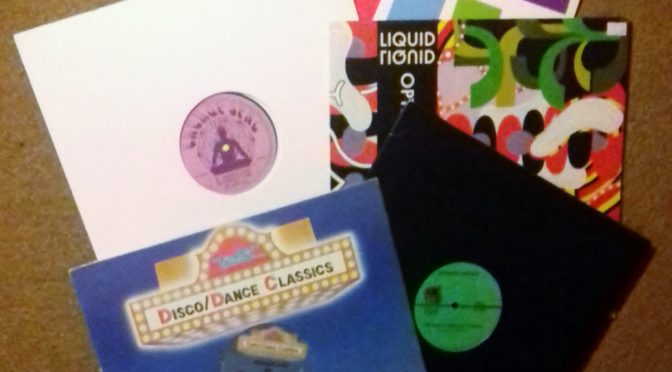
    2. Liquid Liquid – Optimo (Optimo Remix) (Domino 2008)

    Pleasing in so many ways. Firstly, Optimo’s remix makes up for the original version’s scant running time. Secondly, what I really like about this version is that while it’s pretty faithful to the original it feels nicely positioned in clubbier territory. The treatment is subtle and considered. It also hits harder in some ways, not least because the drums sound like they’ve been tweaked to give a more pumping vibe. The additional reverb-drenched trumpet melody gives it an early PigBag / Maximum Joy vibe, which seems entirely appropriate.

    3. Diana Ross – Love Hangover (Tamla Motown 1976)

    “I don’t want a cure for this”. Me neither, Diana. If only actual hangovers sounded like this though. I’d like first to give massive props to my fellow bandmate Emma for introducing me to this song, for which I will be eternally grateful. It’s an undeniably beautiful composition and arrangement. The break (just listen to those hi-hats), tempo change and flawless groove really tug the soul in the way only classic-era disco songs can.

    4. Terr – Energy Sync (Club Mix) (Phantasy Sound 2019)

    A peak-hour banger from Brazilian-born, Berlin-based DJ Daniela Caldellas on Erol Alkan’s London imprint Phantasy Sound. A blend of electro and disco with a classic sound, it’s an ecstatic dancefloor monster full of sensual energy and built around a heartfelt and vulnerable refrain. The perfect tune for a dark, sweaty club somewhere in the heart of Kreuzberg.

    5. North End – Kind Of Life (Kind Of Love) (West End 1979)

    Proof that, contrary to what mainstream documentaries about disco would have us believe, disco was definitely NOT dead by 1979. It simply went back underground. I first heard snippets of this mega-soulful Arthur Baker tune in the documentary The Godfather of Disco: Mel Cheren, and pretty much had to go out and buy it straight away (well, a reissue of it). It’s the kind of tune that never fails when and wherever I play it in a set.  It’s the epitomy of the life-affirming disco anthem.

    6. Luke Vibert – Yeah (Afro Acid 2018)

    I picked up a vinyl copy of this RSD 2018 release at Musicland in Budapest on a cold January afternoon in 2019. This one is definitely a standout, my other favourite being Gary Gamble’s Acid Icon. It’s just a vibin’, nasty, wobbly acid banger.

    7. James White And The Blacks – Contort Yourself (August Darnell Remix) (ZE Records 2003)

    A match made in heaven. James White’s (now James Chance) New York no wave scratchy funk classic given the four-to-the-floor disco treatment by August Darnell (more famously known for fronting Kid Creole And The Coconuts), with Bob Blank on production credits. I remember myself and a pal both losing our minds the first time we heard this in a club. An old band of mine was lucky enough to support James Chance And Les Contortions above a sushi bar in Manchester around 15 years ago. Be sure to check out the original version too.

    8. Kerri Chandler – Bar A Thym (Nite Grooves 2005)

    https://www.youtube.com/watch?v=pw5j9VOqy9A

    A recent revelation for me, thanks to my DJ partner The Boogie Monster, and I must give great thanks because it’s now one of my favourites. It’s one of those absolutely unrelenting deep, dark, hypnotic Chandler bangers you can’t stop yourself dancing to. It’s just such a tight groove and doesn’t give in until you are losing yourself on the dancefloor. It’s a bit like the Terminator only more fun. The cowbell pattern and that little syncopated rhythmic turnaround every four bars – GOD DAMN.

    9. Radiance Featuring Andrea Stone – You’re My Number 1 (Are ‘n Be Records 1983)

    This M&M (Morales & Munzibai) mix of Radiance’s New York boogie classic is, for me, a benchmark of the genre, and is one of my favourite post-disco club records of all time. For the uninitiated, boogie is a sub-genre characterized by its more r&b-tinged, slower grooves and it’s use of both acoustic and traditional rock instruments (live drums, bass guitar), and drum machines and synthesizers. As much as I love Andrea Stone’s vocal it’s all about the bass line and drum loop, which are so satisfying I’d be happy just listening to those two parts on repeat.

    10. Lazywax – Santa Catarina (Lazywax 2020)

    One of the comments on You Tube says “this song makes me want to quit my job and buy a yacht”. Well, quite. Lazywax is the project of DJs Hans Müller & Wolfgang Schneider and this is my favourite release so far on their self-titled imprint. Just waiting for a vinyl release which, under current circumstances, could be a long way off. Anyway, it’s a breezy, chunky, disco bomb with a playful Latin feel and some really solid production. The ascending synth part that begins in the breakdown sounds very reminiscent of Daft Punk’s Crescendolls.

    11. Marquis Hawkes – Sunset (Houndstooth 2018)

    Equally as potent played at sunset or sunrise, this release on Fabric Records’ Houndstooth imprint was definitely one of my favourite dance albums of 2018, with this being one of two standout tracks (the other being We Should Be Free). In my humble opinion deep house can sometimes be a sub-genre full of generic and forgetable music, but this has just the right vibe and balance for me. It’s soulful, swinging, and summery.

    12. The Units – High Pressure Days (Rory Phillips Remix) (Relish 2009)

    San Francisco trio The Units were part of the city’s synthpunk movement that emerged during the early 1980s and which borrowed heavily from genres such as Krautrock, no wave and punk, replacing guitars with synthesizers. Other notable acts from this movement include The Screamers and Suicide. I actually like this Rory Phillips rework more than the original and it’s one of those records people always ask about when you play it in a set.

    13. Omni Featuring Connee Draper – Out Of My Hands (Long Version) (Fountain 1981)

    The original version of a song later re-released in 1987 as a Frankie Knuckles-produced rework by Unfinished Business. Not sure which version I prefer but the original has a less-produced disco/boogie feel and sound, with the rework having a more kick-heavy polished kind of vibe going on. Either way, it’s a pure Chicago banger with a great bass line and a pounding drum track.

    14. Mosca – Bax (Numbers 2011)

    Ah, UK garage. A much-maligned genre these days. I admit that this is one of only three UK garage records I own, but I’m completely unashamed in my love for it. I wouldn’t say it’s a typical Mosca record as he seems to hop across different styles quite a lot, but it’s still my favourite song of his. The swung hi-hat pattern, the classic wub-wub bass line, the occasional syncopation which breaks from the 2 and 4 backbeat are, for me, the defining parts of this tune. And all talk aside, it just totally slays in the club.

    15. The Jackson Sisters – I Believe In Miracles (Prophecy 1973)

    https://www.youtube.com/watch?v=7MYdr8Fkah0

    Quite simply unfuckablewith (or unfuckwithable if you prefer) soulful funky magic from 1973. A record I can listen to any time of the day or night. Originally hailing from Compton LA, the Jackson Sisters recorded just one self-titled album for Tiger Lily in 1976. This was their most successful song and it’s easy to see why. It’s just one of those records one never tires of, from the funky in-the-pocket groove to the beautiful vocals. If this song doesn’t move your heart and soul, well, you’re probably dead.

    16. Jodeci – Freek’N You (MK Dub) (ZAC 1995)

    A peak-hour house monster that just bangs hard. I have very happy memories of playing this one at the last Anthology Brewery rave back in February this year, when the world felt almost normal (whatever that means!). It always brings whistles, whoops and smiles from everyone in the room. Fair to say it’s the sassiest tune on this list?

    17. Prince – 17 Days (Zach Witness Version) (Purple Witness 2019)

    Anyone who knows me knows how much I adore Prince. I remember how excited I was at age 14 somehow getting into the Regent cinema in Redcar to see Purple Rain. That film and album made such a huge impression on me and his death affected me greatly. Anyway, here’s a stomping rework of a pre-Purple Rain song, which I wouldn’t have necessarily thought I would love as much as I do, but then what’s not to love? It’s a beautiful gospel-influenced vocal put to a disco beat and a reverb-drenched conga pattern. Bingo.

    18. Alisha – All Night Passion (Jordan Nocturne Edit) (Nocturne 2019)

    Tune alert! Alisha was a Brooklyn-born singer who had three albums on Vanguard, RCA and MCA between 1985 and 1990. I don’t often say this but this recent JN edit improves on the original through some considered tweaks to both the production and arrangement. The beefed-up drums and synth bass really drive the tune and give the composition a tighter, tougher feel than the original.  Either way, it’s just a great tune with that unmistakable early 1980s New York electro/boogie sound I love so much. It could easily be an early Madonna song.

    19. Happy Mondays – WFL (Wrote For Luck) (Vince Clarke Remix) (Elektra 1988)

    Whilst I’m not really a massive HM fan by any means, I do love this tune and remix. It will forever have a place in my heart because it triggers happy memories of sixth form college and summers spent messing around and getting drunk with good pals in the North Yorkshire countryside.

    20. M’Bamina – Kilowi Kilowi (JD Twitch Edit) (A7 Edits 2019)

    M’Bamina’s 1982 cut ‘Kilowi-Kilowi’ gets the JD Twitch treatment on London / Paris label Africa Seven. What you get from this considered rework by one half of the much-loved Glasgow label and DJ duo Optimo is an understated, laid-back disco groove . M’Bamina (meaning Lightning) was a band from Italy made up of musicians from Congo, Benin and Cameroon.

  • Galaxians one of 39 acts awarded funding through HMUK’s Do it Differently Fund

    Galaxians one of 39 acts awarded funding through HMUK’s Do it Differently Fund

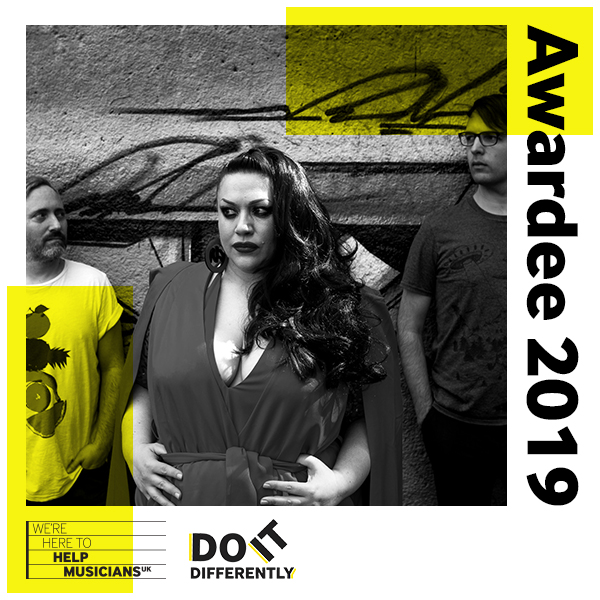
    We’re really pleased to announce that we are one of 39 acts supported by Help Musicians UK’s Do it Differently Fund, alongside other acts from Leeds such as Living Body and Magick Mountain.

    The fund supports the work of self-sufficient artists and promotes self-organised activities in music making, performance and production.

    Read the announcement and further information about the fund here .

  • Interview: DJ Lucy Locket

    Interview: DJ Lucy Locket

    Lucy Locket is one of our favourite DJs. A current member of the Love Muscle collective and former resident at Leeds’ legendary SpeedQueen parties, Lucy blends classic-era disco and house cuts into considered, soulful, life-affirming sets. We spoke to Lucy about music, memories, dance music culture and more….

    *Guest appearance from Miss Frankie Knuckles.

    What is your earliest musical memory and can you remember a pivotal moment when you first realised you felt really passionate about music?

    I have lots of jumbled memories of living in Germany 2-4 years old involving Baby Love – The Supremes, Hands Up – Ottowan, Boney M, the Stars on 45 jingle in particular. But the clincher was receiving the Diana Ross solo album on cassette for my fourth birthday along with a silver handbag. I don’t actually remember the handbag but my sister bursts into peals of laughter about it when birthdays are mentioned because I toddled everywhere with it for a while. I listened to the title song of Why Do Fools Fall in Love so much I wore the tape out.

    What was your environment like growing up, and which records made a big impact on you?

    I’d say watching Top of the Pops and Sesame Street on BFBS made the biggest impact, and I don’t think I’ve moved on that much from either of those shows to be honest. Home environment living in Northumberland once in school was always very music based, mum is a brilliant pianist and classical music fan; dad loves long drives listening to the Beach Boys and Joan Armatrading; us kids were encouraged to take up music / dance / gym lessons when the opportunities came up. My sis and I pooled our pocket money to buy singles from Boots and Woolies, or the Music Shop on Bridge Street in Berwick. It must be noted that I loved then and love now, Just Another Dream by Cathy Dennis which came out in 1990.

    How did your early creative development happen in terms of developing your first DJ sets and being able to say what you wanted to say through music?

    I was a mixtape queen at school and sussed out that you could lead people into listening to some other songs that you wanted them to hear or thought they might like if given the chance, if you buried the song they really like halfway through side B.  

    Could you elaborate on moving to Leeds and playing at Speed Queen?

    I remember it feeling right. I was absolutely certain about moving to Leeds for Uni (aforementioned sister who *spoiler alert* is clearly a huge influence on me, was then in her final year at York). I went clubbing loads, started buying loads more records, bought some belt drive decks and a mixer, handed a tape in to the Speedqueen shop to Suzy for a gig in the upstairs bar and got the gig. I really fell in love with i-Spy held by Kas and Suzy at NATO and then Speedqueen as they were two of a handful of spaces in my entire lifetime I have ever felt comfortable. From starting school onwards my life has been influenced largely by how awkward I feel I am and how awkward I am, so finding somewhere that is either not an issue or even, gasp, celebrated is so liberating. I learned so much about people and the human experience at SpeedQueen because I could tune in to what’s going on for everyone else for once, and I can’t thank Kas and Suzy enough for giving me that space to grow up.

    How much do you think Leeds has changed during the time you’ve been living here?


    This is a difficult one to answer actually because I’ve been here for such a long time and haven’t had many extended breaks from Leeds to truly notice what’s different. It’s cyclical I would say, so the ‘high street clubbing’ that was almost phased out by the time I arrived in 1995, it’s here again now – same as other cities of course. And the skyline is very different! The things I like about Leeds and the things I don’t are pretty much the same, though.

    You’ve been part of the Love Muscle community for a while now. Underneath the fun and intensity of the parties themselves there seems an equally intense desire to establish a community, break down walls and to encourage people who attend to feel free, liberated, and respected. It’s anti-establishment in many ways. We (Galaxians) think that all of those things represent what dance music culture should be about. Would you agree with that?

    Yes! And to celebrate, be glad we’re here, to create a dialogue about what we need, to connect. Wish that was the rule and not an exception though, don’t you?

    Some of our own experiences of playing at parties and club nights is that some of the negative things people talk about experiencing at rock shows (heirarchy, sexism, whitewashing, rock star behaviour) aren’t as prevalent and it can be a more diverse, democratic, shared experience. Do you feel that yourself? Do you experience some of those same issues in dance music culture?

    All of those issues are prevalent in dance music. I totally feel that, it is my lived experience of roughly 25 years of clubbing and there is plenty of evidence out there to back me up, and speak to the lived experience of minority groups I am not part of.  If you look at the history of dance music and DJ culture from 1960s to present day, the inventors, innovators and community who made it happen are not the same as those who amassed / are amassing wealth from it and multiple systems of oppression see to that.

    Parties and club nights that actively work towards creating safer spaces and prioritising communities (LGBTQ+ and/ or POC for example) are where there is a prevalence of diversity, democracy and shared experience. I want to see more parties and festivals out there committing to do the same work at a mainstream level, especially in these times where it’s difficult to find a piece of actual common ground which hasn’t been monetised. We can do better. 

    Do you feel that the DJ should always position themself behind the music, rather than being put on a pedestal?

    There is room for everybody to do their thing in a way that is congruent to who they are and how they want to express themselves. That goes for the dancers too, I’ve had some brilliant nights dancing to DJs who don’t visually give themselves away (Al Kent), or deliberately finding my own corner to get my head down and rave. And I’ve had nights where I’ve actively sought out the connection with whatever is going on behind the decks or wanted to be the centre of attention on the dancefloor (that has happened twice).

    That said, there is some self-interrogation to do if you’re playing music entirely composed and produced by people other than you, and how much credit you can take – or be perceived to be taking – for that. David Mancuso had the approach about right! I could go off on one here about DJing as a skill or set of skills but let’s leave that for another interview. As the wording of your question alludes to, it’s not always the DJ’s choice to be on the pedestal. I know several introverts and turbo nerds who are career DJs for whom the attention is a massive cringe they would rather do without. 

     Your sets at Love Muscle are always super-soulful and fluid, and always build really nicely. Do you prepare or do you play how you feel on the night when you know what the vibe in the room is once you’ve started?

    Ah, that is nice feedback! Thank you. I do prepare, and I do play to the vibe in the room. The preparation bit comes in two ways; to manage my anxiety, and also to figure out what works as I’m mostly disco and a bit of early house, so live drumming can be a bugger to work with. It helps to know and learn your cue points where the drumming is relatively stable, and the phrasing drops in the right place. I always, always overpack so I have room to go somewhere else and follow the interest.

    Tell us about the Equaliser collective and the group workshops you do as part of that?

    I have, sob, recently taken a step back from Equaliser. I have loads of personal stuff going on at the moment so I needed to scale back my commitments. Also it was the right thing to do in terms of ensuring the workshops meet the needs of their audience and as I am a generation older than most workshoppers, I did feel that my literally old-school approach to hosting wasn’t always appropriate or beneficial to their learning.

    The collective has been going for just over 2 years and holds club nights and free-to-access DJ workshops for women, trans and non-binary people. I’d worked for Leeds Met a few years ago teaching DJing so re-used my lesson plans to set up the workshops and then did some ‘train the trainer’ sessions with others in the collective and some previous workshoppers so they can host their own and adapt the materials accordingly to suit their style and audience. Really super proud of everything we’ve achieved so far, the positive difference I can see in Leeds parties and in the way the learning is being shared beyond the collective. 

    What are you listening to at home at the moment?

    My record collection, all over again! I’ve just moved house and now have the opportunity to set up a proper listening / living room – I’ve got some well decent speakers on long term loan from a friend (thanks Lee), a listening deck and even splashed out on some better than average speaker cable. So I’m looking forward to hearing some stuff I own in a different environment to how I had been experiencing it. I had been listening to records at home in a quite a transactional way in my old place, broadly speaking it was an internal conversation of “Is this going to work? Yes / No”, in order to figure out what I could play out at a gig. Now I can listen to it all at leisure, in a different frame of mind.

© Galaxians 2012-2025